One product for parents and children, with different needs and permissions.
01What needed changing
A literacy app taught children to save, but gave families no safe way to use real money. Parents, children, schools and merchants each needed something different from the same child’s balance.
02Decisions we made
What we chose, and why.
01
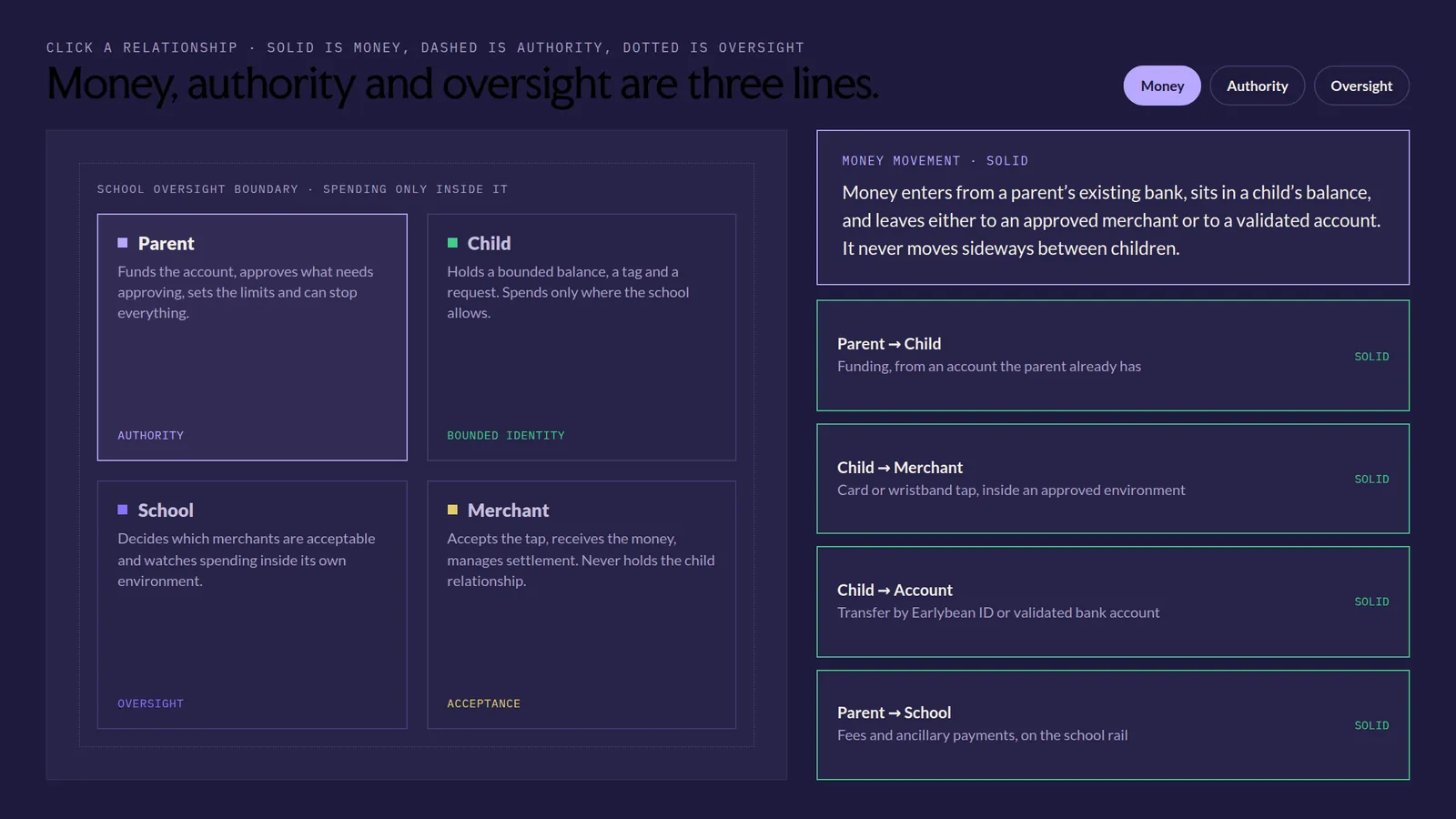
Make the parent the authority, not a bank customer.
Parents fund from accounts they already use, and keep funding, approvals, limits, visibility and blocking as separate controls.
02
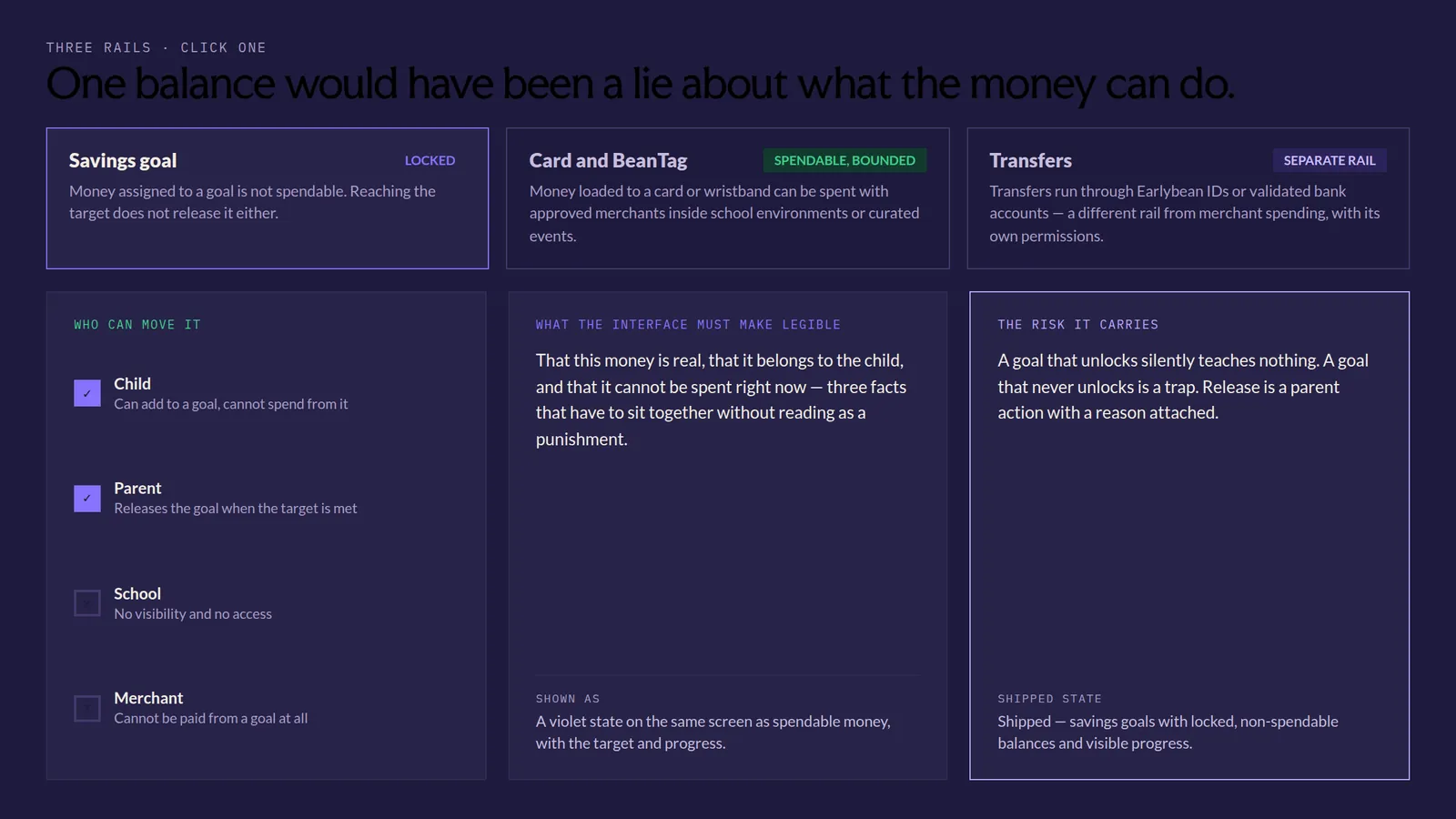
Let money behave by purpose.
Goal money is locked, tag money spends only at approved merchants and transfers run on their own rail, so the app shows three rails instead of one balance.
03
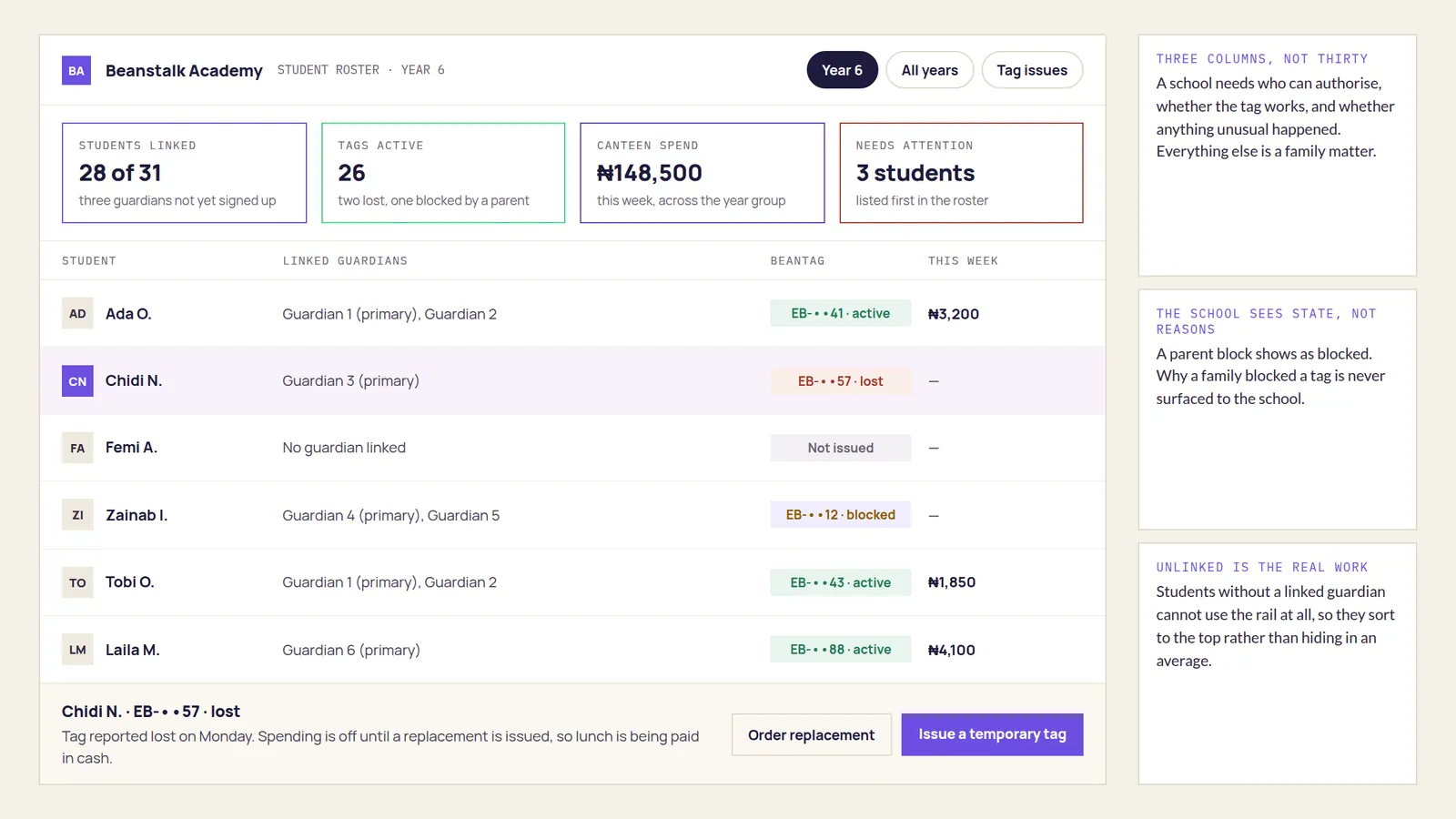
Keep spending inside approved places.
Schools decide which merchants accept a child’s tag, so children are not walking around with spendable money.
03The work
The moments that matter.
Redrawn from the shipped product with representative data.
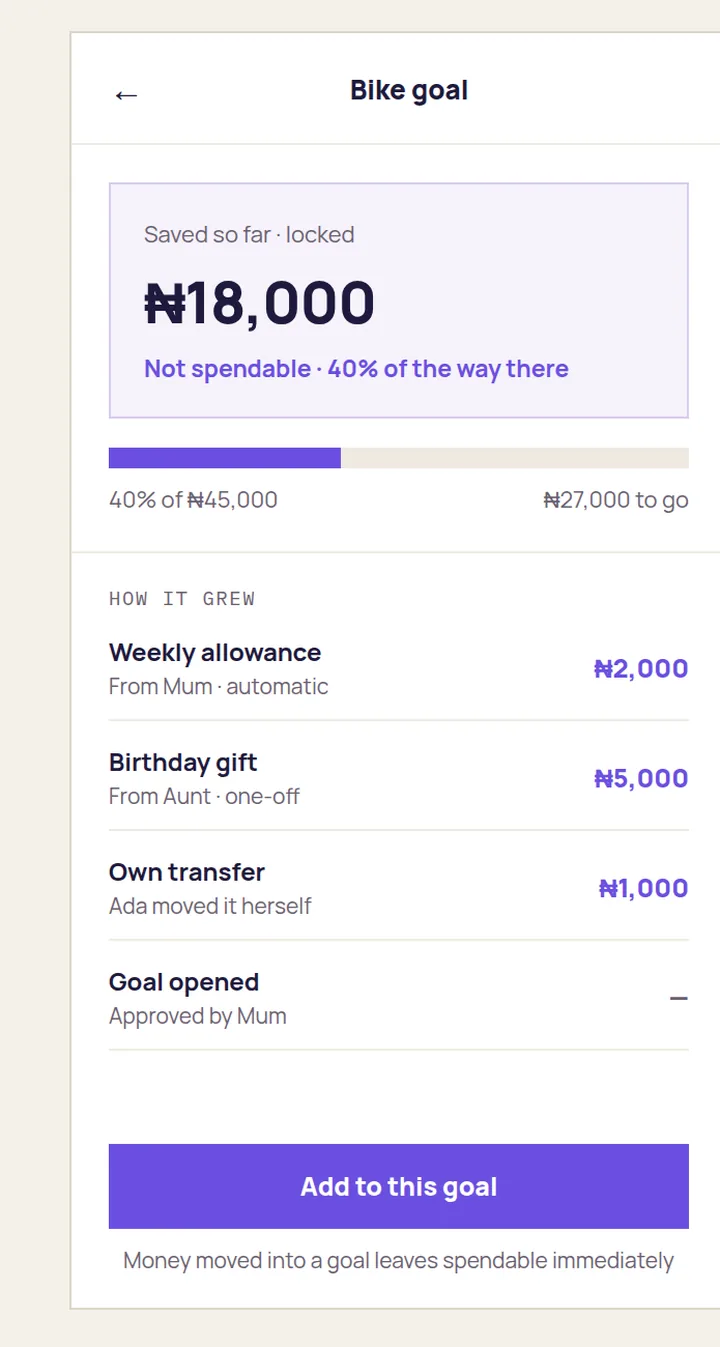
When a goal is reachedReaching a savings goal is a decision for the parent, not an automatic unlock.
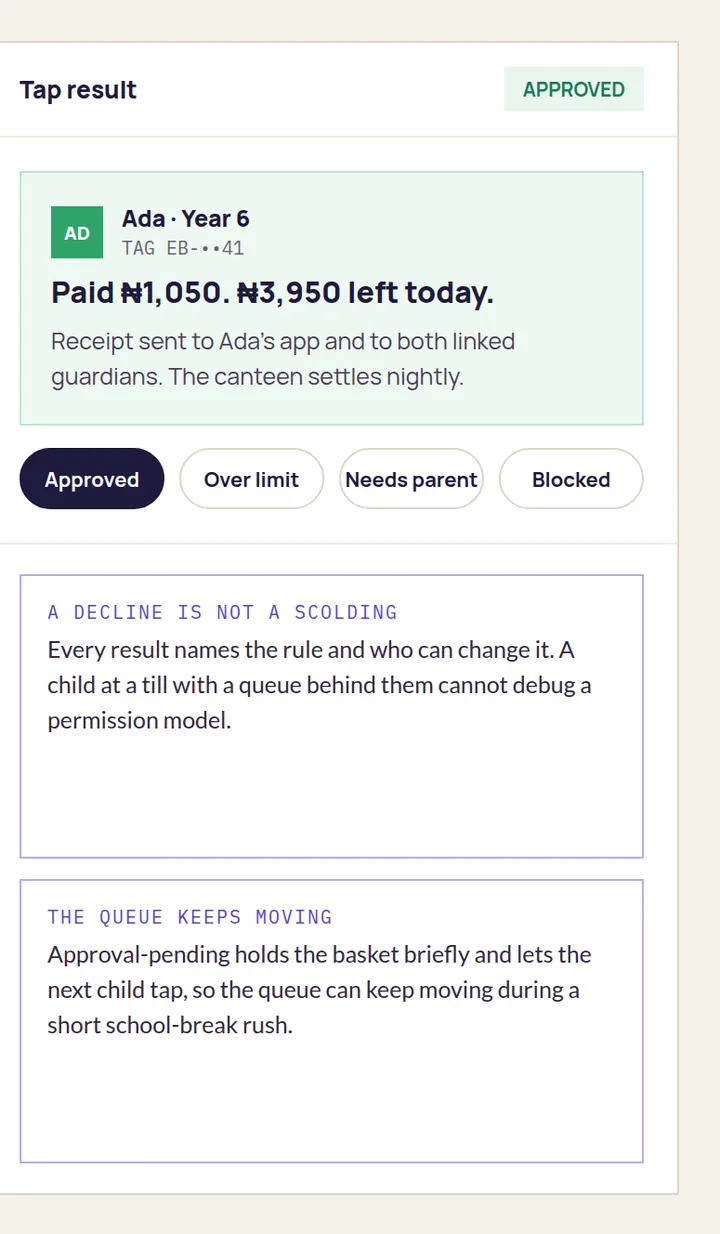
When a child taps to payThe child, the till and the parents see the same result, and a decline names the rule that stopped it and who can lift it.
04What followed
What followed
3,416active usersSource: Earlybean backend snapshot, July 2026
10schools and merchants onboardedSource: Earlybean backend snapshot, July 2026
₦48.29mcumulative inflowsSource: Earlybean backend snapshot, July 2026
—Who leads the workAbout us →
The same people, from the first call to launch.

Tomiwa OgunmodedeOwns framing, product, brand, experience and the critical creative and commercial decisions.

Adejoke AdedapoOwns client strategy, communications, media thinking, delivery and the commercial rhythm around the work.

Balogun AbiodunOwns engineering architecture, feasibility, integrations and turning decisions into resilient working software.
—Keep going